
English| EUR
Suggested for you
More currencies
Choose a language
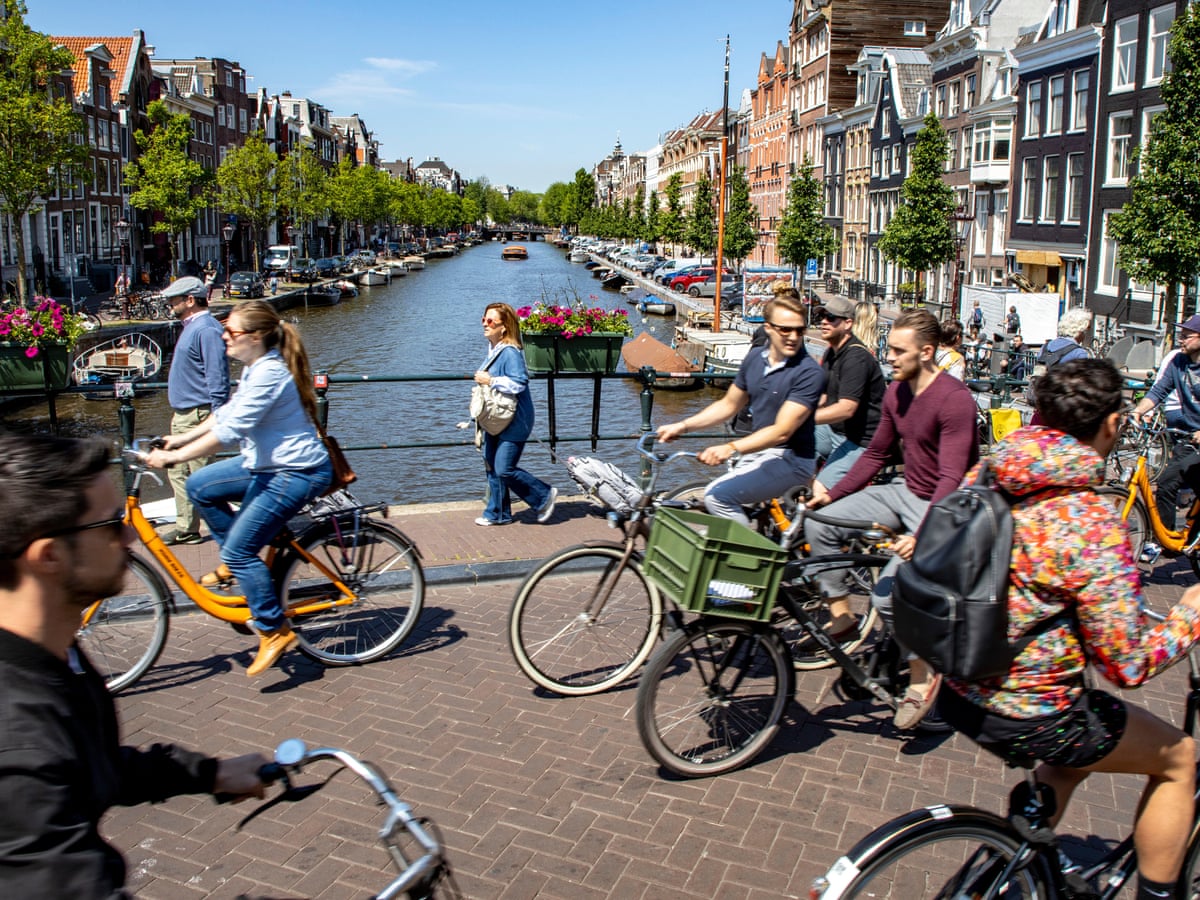
Amsterdam holds roughly 400 kilometres of cycle paths and more bicycles than residents, which makes the bike the city's default sightseeing vehicle rather than a novelty. This amsterdam bike tour route guide maps how the main loops string together — Centrum, the Grachtengordel, Vondelpark, the Eastern Docklands — and when the fietspaden are calm enough to enjoy them.
Quick answer
Access costs 0 EUR: public streets and cycle paths are free, open 00:00–23:59 every day of the week. A standard Amsterdam cycling tour covers the Canal Ring, Jordaan, Museumplein and Vondelpark. Arrive between 09:00 and 11:00, which avoids morning rush hour and peak afternoon crowds in the city center. Guided rides and rentals are booked separately.
Amsterdam's cycle network was not built for tourists. It was rebuilt in the 1970s after protest movements forced the city to abandon plans that would have filled in canals for motorways. The result is a grid of red-asphalt fietspaden with their own traffic lights, right-of-way rules and rush hours — and the reason any sensible amsterdam bike tour route follows the water rather than fighting the traffic. Most riders are dealing with two overlapping cities. The medieval core, between Centraal Station and the Amstel, is tight, cobbled and crowded with trams, delivery vans and pedestrians who step off kerbs without looking. Outside it sits the 17th-century Grachtengordel — Herengracht, Keizersgracht, Prinsengracht — a set of concentric canals whose bridges and gabled façades form the stretch most visitors picture. West of that lies the Jordaan, with its narrow lanes and Noordermarkt; south lies Museumplein and Vondelpark, where paths widen and the surface stops rattling. East, the Oosterdok and the Eastern Docklands open into long, straight waterfront runs past the NEMO building and Java-eiland. A free ferry behind Centraal Station crosses the IJ to Amsterdam-Noord in under five minutes, which is how most longer rides reach the windmill at Nieuwendammerdijk or the countryside beyond Durgerdam. Understanding that geography is what makes a route choice meaningful. Short city loops of around ten kilometres stay inside the canal belt and cross a bridge every few hundred metres, trading speed for density of Amsterdam landmarks. Longer rides cut north or south-east out of the centre, where cycle paths run beside dykes and the stops become fewer and longer. Guided Amsterdam bicycle tours tend to pick one register or the other; independent riders often underestimate how much time bridges, canal-side photo stops and tram crossings absorb. Two practical habits matter more than the exact line drawn on a map. Keep right, signal with an outstretched arm, and never stop on a cycle path — locals commuting at speed will not expect it. And lock the frame and the front wheel to something fixed, because theft remains the city's most routine cycling problem. Visitors comparing a self-guided plan against a guided amsterdam bike tour route should weigh how confident they feel in traffic rather than how many sights a list promises; the booking pages on this site set out what each ride actually covers.
“Any sensible route through Amsterdam follows the water rather than fighting the traffic.”
The best arrival window for your Amsterdam bike tour is 09:00–11:00. This period allows you to navigate the city center after the morning commuter rush while avoiding the heaviest afternoon congestion.
Mild, 10°C to 17°C
Tulip season brings higher visitor numbers but pleasant temperatures for cycling.
Warm, 15°C to 22°C
Long daylight hours are ideal for extended rides, though popular paths experience significant congestion.
Cool, 9°C to 16°C
Clearer paths and crisp air make this a favored time for experienced cyclists.
—
Arriving between 09:00 and 11:00 offers the most predictable conditions for your route.
Verdict: For the most efficient cycling experience, target weekday mornings in April or October.
This loop suits first-time visitors comfortable on a city bike in traffic, covering the canal belt, two museum districts and the eastern docks in roughly four hours of relaxed riding plus stops. Starting between 09:00 and 11:00 keeps the central canals manageable before the day fills up.
Pick up the route at Dam Square beside the Royal Palace and Nieuwe Kerk, then ride west along Raadhuisstraat. Allow ten minutes here, and dismount to cross the tram tracks rather than riding over them at an angle.
Follow the Prinsengracht past the Westerkerk and Anne Frank House, then weave into the Jordaan via Bloemgracht and Egelantiersgracht. Expect 30 to 40 minutes, including photo stops at the narrow bridges.
Ride the Herengracht, Keizersgracht and Prinsengracht in sequence toward the Amstel, passing the Nine Streets and Golden Bend. Cobbles and narrow quays here mean slow going, so budget 30 minutes.
Cross to Museumplein for the exterior of the Rijksmuseum and Van Gogh Museum, then enter Vondelpark through the eastern gate. Plan 45 minutes for a full park circuit and a coffee break.
Return east along the Amstel past the Magere Brug and Hermitage building, then cut into De Pijp near the Albert Cuyp market. About 40 minutes, with the bike lane busiest around Stadhouderskade.
Head through the Plantage district past Hortus Botanicus toward Oosterdok, the NEMO building and the Python Bridge on Borneo Island. Allow 45 minutes; the wide lanes here are the easiest riding of the day.
Follow the IJ shoreline west past Central Station to close the loop near Dam Square. Fifteen to twenty minutes, and walk your bike through the station passage where cycling is restricted.
Accessing the cycling infrastructure of Amsterdam requires no entrance fees for the public network. Costs associated with a bike tour are limited to the rental of equipment and any optional guided services.
Verdict: The entry cost to the route is 0 EUR, while total expenses depend solely on whether you choose to rent a bicycle or engage a commercial tour operator.
The public streets and cycling paths that comprise the Amsterdam bike tour route are accessible at all times. This 24-hour availability allows for flexible planning when navigating the city independently.
Amsterdam's bike infrastructure is efficient, but tram tracks, crowded canal bridges, and unwritten cyclist etiquette catch visitors off guard. Avoid these pitfalls to keep your tour safe and enjoyable.
Crossing tram tracks at shallow angles
Cross tracks perpendicular to the rails—your wheel can catch in the groove and throw you off balance if you approach at an angle.
Cycling during morning or evening rush hour (08:00–09:00, 17:00–18:00)
Plan your route between 09:00 and 11:00 or after 18:30. Rush hour fills cycle paths with fast-moving commuters, leaving little room for leisurely touring.
Stopping abruptly on narrow canal bridges
Signal and pull to the side before stopping. Bridges funnel heavy two-way traffic into tight lanes, and sudden stops cause collisions.
Ignoring the bell from cyclists behind you
A bell means someone needs to pass—hold your line or move right. Swerving unpredictably after hearing a bell creates more danger than staying predictable.
Locking your bike to canal railings or random posts
Use official bike racks. Improperly locked bikes are removed by the city, and retrieval involves a fine and a trip to a distant impound lot.
Prepare these essentials before you set out on your Amsterdam bike route.
Everything you need to know about amsterdam bike tour route
For those new to city cycling, sticking to the dedicated cycle lanes through Vondelpark or the Amstel River path provides a relaxed introduction. These paths are well-marked and avoid the most chaotic traffic zones found in the city center. Following a planned amsterdam bike tour route ensures you see major landmarks like the Museum Quarter and historic canal houses safely. Always remain aware of your surroundings and local cyclists who commute daily.
Public streets and cycle paths are free to access, so there is no fee to use any amsterdam bike tour route. While you may choose to rent a bicycle from a local provider, the infrastructure itself is open to the public at no cost. You are free to navigate the city's network of paths independently 24 hours a day. Enjoy the freedom of exploring at your own pace without ticket restrictions.
The best arrival window for your cycling adventure is 09:00–11:00 to avoid morning rush hour and peak afternoon crowds. Starting your amsterdam bike tour route during this timeframe allows for a much smoother experience on narrow paths. By planning your journey for these hours, you can navigate intersections with greater ease. Most urban traffic stabilizes after the morning peak, making mid-morning ideal for visitors.
Families can certainly enjoy cycling together, provided children are confident riders accustomed to city traffic. It is advisable to select a quiet amsterdam bike tour route that avoids major tram lines and heavy tourist intersections. Many rental shops provide child-sized bicycles or seats, ensuring everyone has appropriate equipment. Always prioritize safety by keeping young riders between adults when navigating public lanes.
Cyclists in Amsterdam must adhere to traffic signals, use hand signals when turning, and always yield to trams. Never ride on sidewalks, as these are reserved for pedestrians. Respecting the right-of-way of local commuters is essential for maintaining a positive atmosphere on the cycle path. Following these basic traffic laws will keep your cycling trip enjoyable and safe.
While you can freely navigate any amsterdam bike tour route on your own, booking a guided excursion can be helpful if you want local insights. Guided options often provide pre-planned itineraries that highlight hidden gems and historical context you might otherwise miss. If you choose an independent path, simply ensure your navigation app is updated with current cycle lanes. Booking ahead is only necessary if you require a specific type of bicycle from a rental shop.
For a successful day of cycling, pack a sturdy lock, a water bottle, and a waterproof layer, as weather can change quickly. Comfortable clothing and closed-toe shoes are recommended for better pedal control. Ensure your bicycle has working lights if you plan to cycle near dusk or after dark. Finally, keep your camera handy to capture the beautiful canal views along your journey.